
Many struggling readers practice regularly but still feel frustrated by their progress.
They read books.
They study phonics.
They complete reading exercises.
Yet their reading still feels slow and difficult.
One simple technique can make a surprising difference:
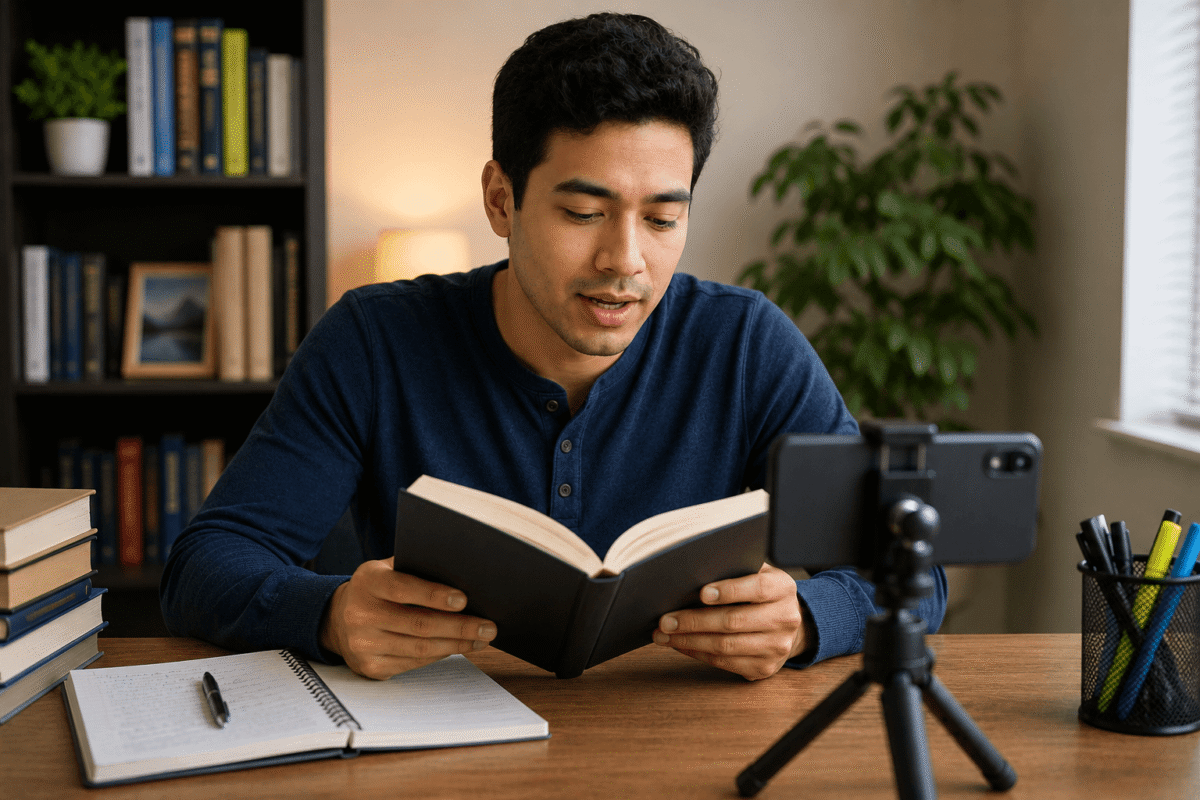
Recording yourself reading.
At first, this idea may sound uncomfortable.
Most people do not enjoy listening to recordings of their own voice.
However, recording yourself reading can become one of the most powerful tools for improving fluency.
It helps you notice mistakes, track progress, and build confidence.
Let’s look at why this simple habit works so well.
What Is Reading Fluency?
Reading fluency is the ability to read accurately, smoothly, and with appropriate expression.
Fluent readers:
- recognize words quickly
- read with fewer pauses
- understand what they are reading
- sound natural when reading aloud
Many people focus only on reading speed.
However, fluency is much more than speed.
Accuracy and smoothness are equally important.
When fluency improves, comprehension often improves as well.
Why Most Readers Miss Their Own Mistakes
One challenge many struggling readers face is that they do not notice their own errors.
For example, a reader may:
- skip words
- mispronounce words
- guess unfamiliar words
- ignore punctuation
Because the reading continues, these mistakes often go unnoticed.
This is one reason we discussed the importance of feedback in The Biggest Mistake Struggling Readers Make When Practicing Alone.
Without feedback, mistakes can become habits.
Recording yourself creates a form of feedback.
Why Recording Yourself Works
When you listen to a recording of your reading, you hear your reading from a different perspective.
Mistakes that seemed invisible during reading become easier to notice.
You may discover:
- words you skipped
- words you guessed
- places where you hesitated
- sentences that sounded awkward
This awareness is valuable.
You cannot fix mistakes you do not notice.
The First Recording May Surprise You
Many readers feel shocked the first time they listen to themselves.
They often notice:
- frequent pauses
- inconsistent pacing
- incorrect pronunciation
- lack of expression
This is completely normal.
The purpose of recording is not to criticize yourself.
The purpose is to learn.
Think of the recording as information, not judgment.
How To Record Yourself Reading
The process is simple.
Step 1
Choose a short passage.
One paragraph is enough.
Step 2
Read the passage aloud.
Use your phone’s voice recorder.
Step 3
Listen to the recording.
Pay attention to:
- mistakes
- pauses
- difficult words
- pronunciation
Step 4
Practice the passage again.
Correct any mistakes you noticed.
Step 5
Record yourself a second time.
Compare the two recordings.
Most readers notice improvement immediately.
Why Repeated Reading Helps
One of the best ways to improve fluency is repeated reading.
After listening to your recording, read the same passage again.
Then read it again.
Each repetition helps:
- improve word recognition
- increase confidence
- reduce hesitation
- strengthen fluency
This is why repeated reading remains one of the most effective reading exercises.
You can learn more in Why Reading the Same Passage Again Improves Fluency.
Recording Helps You Notice Difficult Words
Many readers discover that certain words consistently cause problems.
Instead of ignoring those words, write them down.
Create a difficult-word notebook.
Practice those words separately.
This connects well with the strategies discussed in What to Do When You Meet a Word You Cannot Read.
Every difficult word becomes an opportunity to improve.
Recording Improves Confidence
Confidence grows when you can see evidence of progress.
Imagine recording yourself today.
Then recording yourself again one month later.
The difference may be remarkable.
You may notice:
- smoother reading
- fewer mistakes
- stronger pronunciation
- better expression
These improvements motivate you to keep practicing.
Many readers improve before they realize they are improving.
Recordings help make progress visible.
Recording Helps Build Self-Awareness
Strong readers pay attention to their reading.
They notice:
- errors
- hesitations
- confusing sections
Recording helps develop this awareness.
Over time, you become better at identifying mistakes while reading instead of after reading.
This creates faster improvement.
Common Mistakes To Avoid
Trying To Read Too Fast
Many struggling readers rush.
Slow down.
Accuracy comes before speed.
Recording Passages That Are Too Difficult
Choose material that challenges you without overwhelming you.
Focusing Only On Mistakes
Celebrate improvements too.
The goal is progress, not perfection.
Comparing Yourself To Others
Compare yourself to your previous recordings.
Your progress is what matters.
A Simple Weekly Plan
Here is a simple routine:
Monday:
Record yourself reading one paragraph.
Tuesday:
Practice difficult words.
Wednesday:
Reread the passage.
Thursday:
Record the passage again.
Friday:
Compare the recordings.
This process takes only a few minutes each day.
Yet it can produce significant improvements over time.
How Phonics Supports Recording Practice
Recording becomes even more effective when combined with phonics.
When you hear yourself struggle with a word, phonics gives you tools to decode it.
This is why phonics, fluency, and practice work best together.
Learn more in How to Combine Phonics, Fluency, and Practice Effectively.
Signs Recording Is Helping
You may notice:
- fewer pauses
- smoother reading
- better pronunciation
- increased confidence
- stronger comprehension
These are all signs of growing fluency.
You can learn more in How to Know If You Are Improving Your Reading Skills.
Final Thoughts
Recording yourself reading may feel uncomfortable at first.
However, it is one of the simplest and most effective ways to improve fluency.
It provides feedback.
It reveals mistakes.
It helps track progress.
And it builds confidence.
The next time you practice reading, try recording yourself.
You may be surprised by how much you learn.
Small improvements recorded consistently can lead to remarkable growth over time.
Ready To Improve Faster?
If you want a complete step-by-step system that combines phonics, fluency, and reading practice, my Reading Made Easy Program can help.
👉 Get the Reading Made Easy Program Here
Prefer to start free?
👉 Download Your Free Daily Reading Guide Here
You can also get the Reading Made Easy with Phonics Paperback on Amazon for additional practice and support.
Keep reading, keep practicing, and keep improving.